
This is the magic of the Karrabing Film Collective (KFC) who are unique in the Australian and international art scene with their filmmaking practice based on a highly original method of performing political aesthetics. Their powerful blend of film/art/documentary/visual storytelling surfaces often hidden power relations between people, history and place in something akin to what their long-standing collaborator Elizabeth Povinelli describes as “a sign that demands (sic) to be heeded."*
Their method of creating this demand – this imperative to be heard/seen/felt – is uniquely crafted by film-making methods that first appear as somewhat basic and intuitive. But their apparently natural and highly improvised direct story-telling technique derives from a complex Indigenous cultural and socio-historical intuition that translates into a remarkable decolonising insight. The magic of KFC’s films – their art – is a kind of reverse psychology of film where instead of absorbing the viewer into their own community’s story, they expand their local story into a global world where everyone is inherently involved. The impact of global mining companies, trans-national bureaucratic racism, climate change, marine pollution, mass over-consumption and waste, and the enduring legacy of colonialisation’s violence and injustice are woven into stories that blur boundaries between fact and fiction, history and mythology.
Indigenous art’s political aesthetics in Australian art history was spearheaded by expressions of Indigenous sovereignty, particularly in terms of land rights and political self-determination. Artists from communities in Arnhem Land, not far from KFC’s base in traditional homelands in Belyuen in the Northern Territory led the charge. Arnhem Land’s legacy is obvious to visitors to the nation’s capital, Canberra, where artworks on display at Australia’s Parliament House include the 1963 Bark Petition, from Arnhem Land’s Yirrkala community. The petition appealed to the House of Representatives to be consulted on an excise of their traditional homelands for a mining lease.** Parliament House also permanently displays the 1988 Barunga Statement canvas painting that blends land rights appeals from traditional landowners in Arnhem Land and Central Australia. Not far from Parliament House the National Gallery of Australia includes a permanent display, and virtual rite of passage to the story of Australian art, with the Aboriginal Memorial (1988) from Arnhem Land’s Ramingining community. This massive sculptural installation transforms 200 lorrkkon (hollow log coffins) into a statement of mourning regarding 200 years of invasion and stolen Indigenous sovereignty.
These iconic artworks are clearly signs that demand to be heeded, but KFC’s work arguably generates a greater sense of immediacy and proximity. The apparently harmless whimsy of stories about zombies and mermaids can turn viewers’ smiles into frowns of empathy in the turn of a phrase, or with a shot panning out into a beautiful landscape littered with the industrial world’s trash.
The Karrabing Film Collective's decolonising signs
Don’t you love stories that flip most people’s idea of nowhere into a very intimate experience of somewhere?
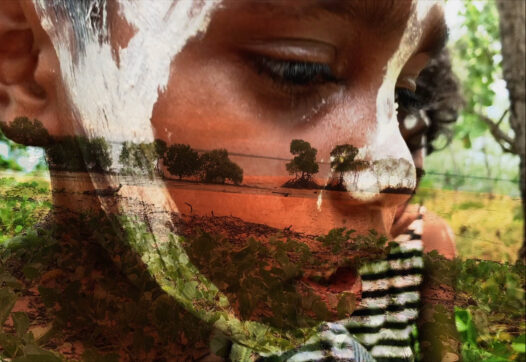
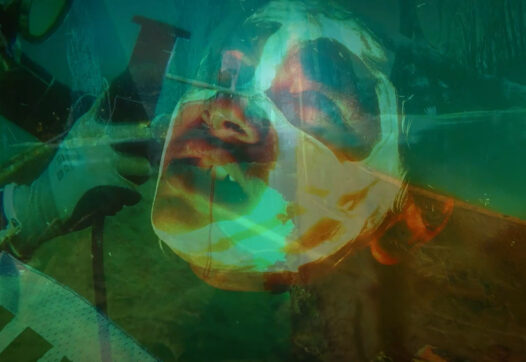
People’s everyday troubles that seem like scenes out of an unusually located television family sitcom evolve into a consciousness of humankind’s capacity for injustice and inequity. As mentioned, it is this constant blow-out from the local to the global that is the real art of KFC’s films, and where the work forces new thinking about every individual’s agency in a world of others.
Along with many major Australian and international film festivals, KFC’s work has featured in significant Australian art exhibitions such as the Sydney Biennale and the Asia Pacific Triennial of Contemporary Art. Recognition of KFC as contemporary art is important, because it helps transform and expand concepts of art. Apart from their technique of genre-blending; not only between art and film, but between fact and fiction, myth and history; KFC are leaders in collaborative cross-cultural creativity.
Perceptions of cross-cultural collaboration in the visual arts are still tricky where it concerns Indigenous Australian art. A history of exploitation and a lack of Indigenous agency sit heavily on any attempts at collaborative enterprise. But KFC includes the long-standing involvement of USA-based anthropologist, activist and filmmaker, Elizabeth Povinelli, along with its more than 30 members of the Belyuen Indigenous community. KFC have also worked variously with film crews, curators, residencies, and project teams around the world. There is real leadership in this collaborative method because what always shines through their creative output is a genuine sense of Indigenous insight of how people, place and the passage of time are interconnected; and entrenched in a network of reciprocal obligation.
Herein lies the sign that demands to be heeded.
Povinelli has written about an Indigenous perceptual concept of ‘manifestation’ that transforms observation into significance.*** The cultural, philosophical, and theoretical complexity of this ‘manifestation’ is beyond the scope of this discussion, however is worth mentioning because it involves a way of reading the world in its entirety that potentially helps in being what our times refer to as ‘glocal’, or in other words, how to be local and global at once.
KFC’s films often include signs within signs; location props such as background signs that scaffold and complicate the story. The film titled Windjarrameru: The Stealing C*nt$ (2014) follows some young men falsely accused of stealing alcohol who hide in a toxic swamp contaminated by a mining company’s pollution.
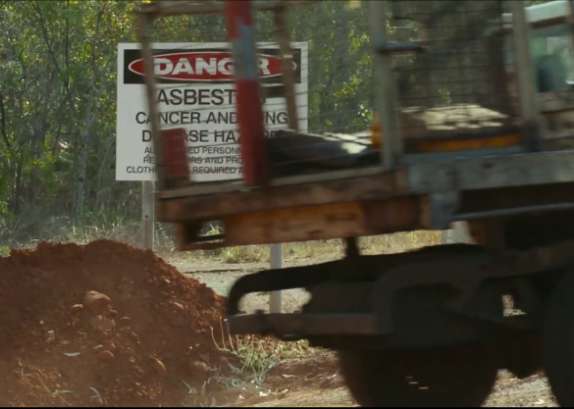
The film’s background signs – ‘Stop Poison’, ‘Warning Radiation’, ‘Danger, Asbestos, Cancers and Lung Disease Hazard, Authorized Personnel Only, Respirators And Protective Clothing Are Required At All Times’ - poignantly contrast the enormity of the mining company’s environmental and social crime against the alleged minor crime of the next generation of traditional owners of that land.
These signs and props make obvious what every Indigenous community understands within their concept of stolen sovereignty. The irony and perversion of contested values about the relationship between people and land, and between people of differing cultures, is writ large in the mundane, everyday existence of the majority of First Nations people across the world. Privilege is about living a life blinded to these contested values, but KFC’s work is a constantly decolonising lens that combats the blindness.
* Elizabeth A. Povinelli, ‘Fossils and Bones’ in Geontologies: A Requiem to Late Liberalism, Duke University Press, Durham NC, 2016, p.59.
** Howard Morphy, Aboriginal Art, Phaidon Press, London, 1998: 254-260.
*** Povinelli, ibid.
Sally Butler teaches art history and is a freelance curator and artswriter focusing in the area of cross-cultural approaches to contemporary art.