
The Apu trilogy was followed by another 36 feature films, shorts and documentaries, including renowned titles such as The Big City (1963), Charulata (1964), The Adversary (1970) and The Home and the World (1984).
Films, Talks & Events
Satyajit Ray
In Search of the Modern
28 November — 25 December 2024
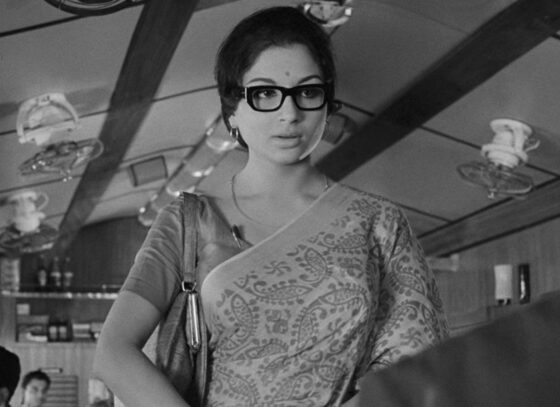
still The Hero (Nayak) (Satyajit Ray, IN 1966)
Pather Panchali brought Satyajit Ray great accolades. His depiction of the escapades of poor Bengali boy Apu was received internationally as a groundbreaking renewal of Indian cinema. The subsequent episodes of this ‘Apu trilogy’ (Aparajito, 1956; The World of Apu, 1959) likewise made a great impression.
His name has been embedded within the canon for decades now; nevertheless, his films haven’t been screened in the Netherlands for a long time. Eye is screening a cross-section (thirteen digital restorations) of Satyajit Ray’s oeuvre, as well as a nationwide release of Ray’s famous feature debut, Pather Panchali (1955).
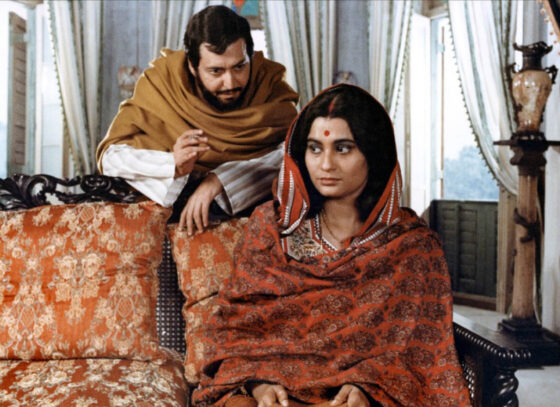
still The Home and the World (Ghare baire) (Satyajit Ray, IN 1984)
Watch the programme trailer:
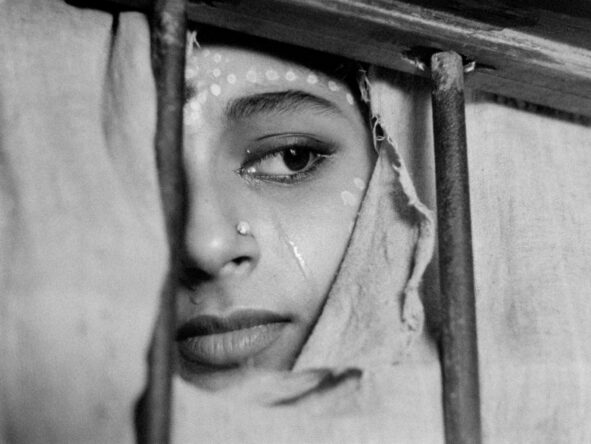
still The World of Apu (Apur sansar) (Satyajit Ray, IN 1958)
International status
Directors as wide-ranging as Wes Anderson, Christopher Nolan and Martin Scorsese have praised Ray’s qualities as a supremely accomplished, natural storyteller. And Japanese cinema giant Akira Kurosawa once said: “Not to have seen the cinema of Ray means existing in the world without seeing the sun or the moon.”
That comment indicates the international status enjoyed by Satyajit Ray (1921-1992), this Indian filmmaker born into a family of prominent Bengali intellectuals. Ray’s films were admired for the empathetic, compelling way in which the filmmaker illuminated the lives of his protagonists. Ray subtly tackled social themes such as the rise of an urban middle class, female emancipation, religious fanatism and the harshness of life for small farmers amidst India's impressive nature.
Historical dramas, comedies, musicals, family films, socio-cultural portraits of a country that had wrested itself free from British rule: Satyajit Ray was at home in many styles and genres, having absorbed influences from the greats who preceded him, such as Vittorio De Sica, John Ford, Billy Wilder and Jean Renoir. Ray, who trained as a painter and graphic artist, proved to be a genuine polymath: as well as directing, he undertook the screenplays, editing, casting, music and even designed the posters for his films.
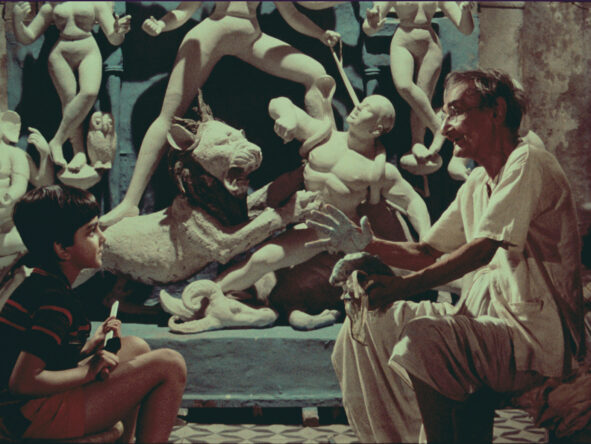
still The Elephant God (Joi Baba Felunath) (Satyajit Ray, IN 1979)
Bengali filmmaker
Another exceptional aspect was Ray’s status as an emphatically Bengali-Indian filmmaker, away from the Hindi-dominated Bollywood film industry in Mumbai; almost all of Satyajit Ray’s films are in Bengali, the second language by size in a country where more than four hundred languages are common. Ray did not consider himself to be a representative of ‘Indian cinema’ as such, however, but rather a Bengali filmmaker addressing universal themes.
Not to have seen the cinema of Ray means existing in the world without seeing the sun or the moon.
Akira Kurosawa
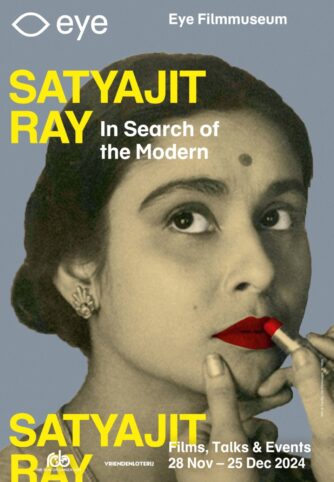
Films, Talks & Events
Eye is screening a cross-section made up of thirteen films from Satyajit Ray’s oeuvre; all of them recent restorations. The programme also includes the nationwide release of Pather Panchali (4K restoration); the film can also be seen on Eye Film Player.
In addition, we are showing a programme of films by directors who influenced Ray – including Vittorio De Sica (Ladri di biciclette, 1948) – alongside work by contemporary directors who admire Ray, such as Wes Anderson (The Darjeeling Limited, 2007) and Mira Nair (Salaam Bombay, 1988).
Made possible with the help of

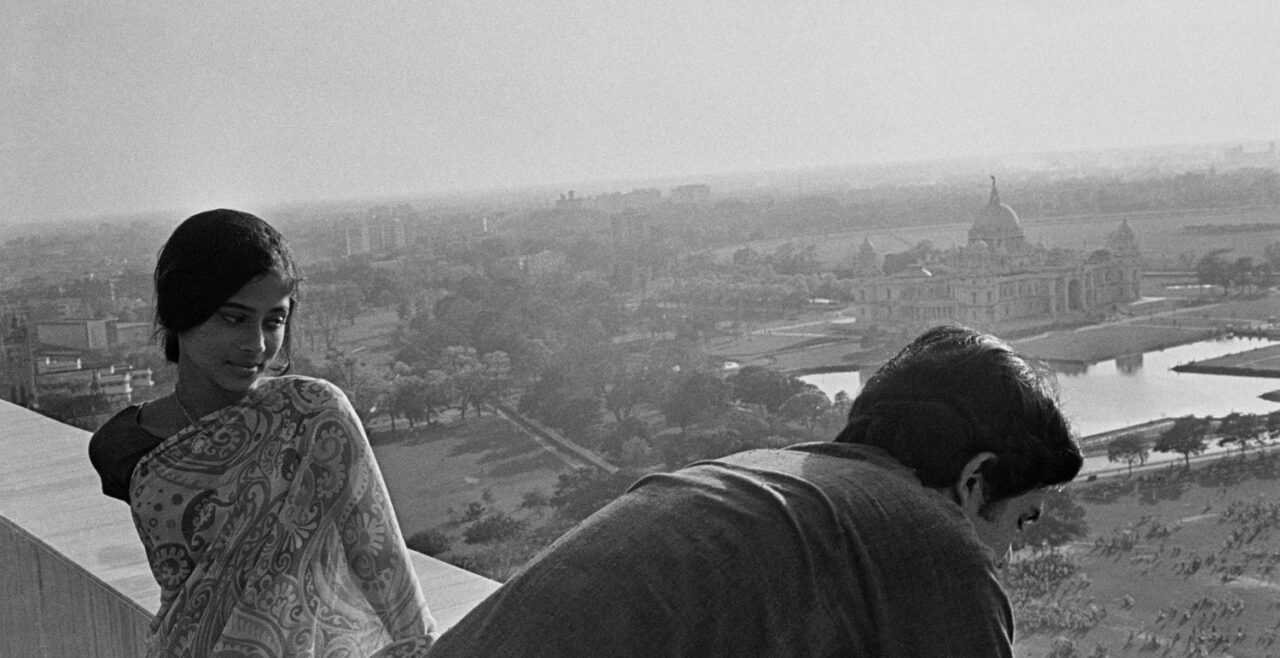
still The Adversary (Pratidwandi) (Satyajit Ray, IN 1970)
Share your love for film and become a member of the Eye Society.